
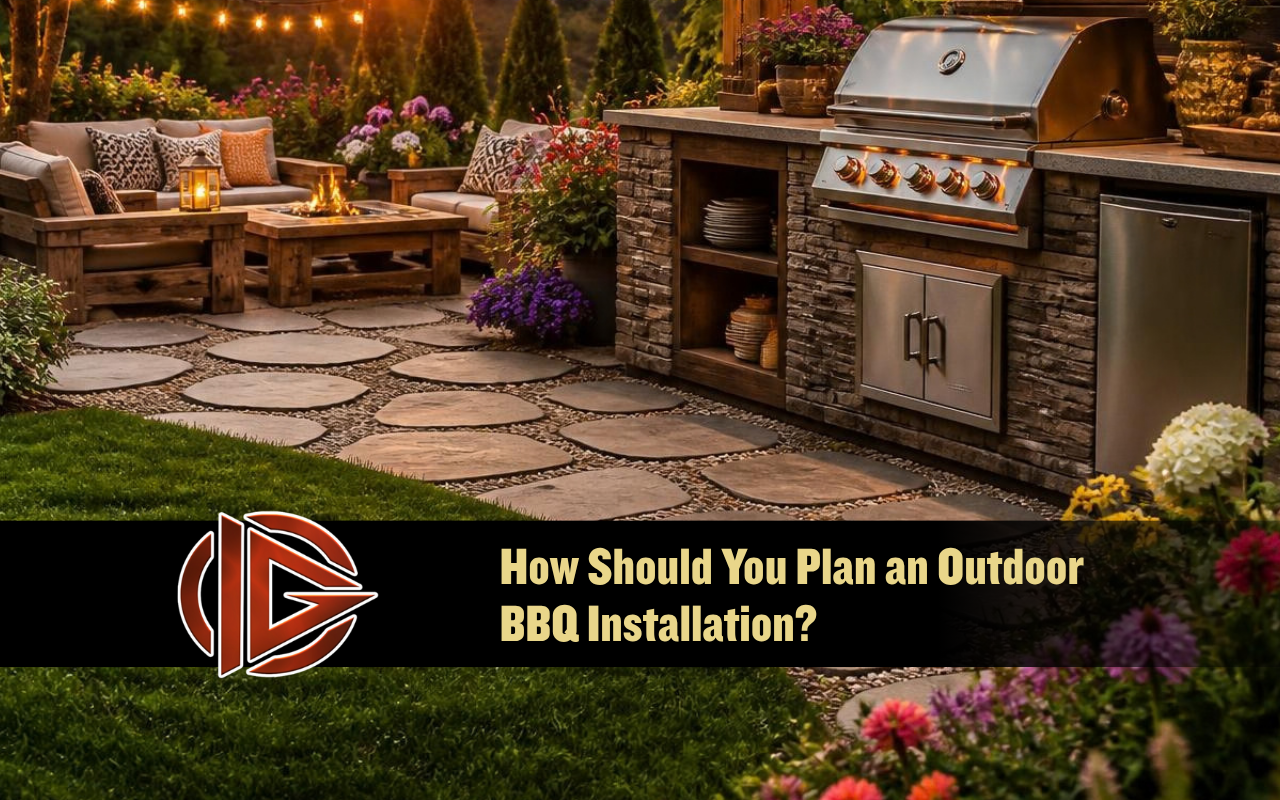
A successful outdoor BBQ installation requires a safe location, stable foundation, suitable ventilation, protected utilities, durable materials, and enough workspace. The design should also support cooking, serving, storage, lighting, and future maintenance. Before choosing equipment, explore our construction services for professional outdoor project planning.
Planning these elements together creates a safer and more convenient cooking area. It also prevents expensive layout changes after counters, appliances, or utility connections have been installed.
Selecting a Safe and Convenient BBQ Location
Place the BBQ where food can move easily between the indoor kitchen, cooking area, and outdoor seating. However, convenience should never override ventilation or fire-safety requirements.
Avoid locations where smoke can enter doors, windows, or ventilation openings. The cooking area should also remain separated from busy pathways, play areas, combustible landscaping, and crowded seating.
- Choose a stable and level installation area
- Maintain convenient access from the kitchen
- Keep smoke away from windows and doors
- Preserve clear movement around the grill
- Consider prevailing wind and nearby seating
Planning Ventilation and Fire-Safe Equipment Clearances
An uncovered grill needs open airflow so heat, smoke, and combustion gases can disperse. Covered kitchens, pergolas, and partially enclosed patios may require additional ventilation planning.
Required clearances depend on the appliance, fuel, enclosure, overhead structure, and nearby materials. Always follow the equipment manufacturer’s installation instructions and applicable local requirements.
Do not assume every grill can be installed beneath an overhang or inside standard cabinetry. Built-in equipment requires an enclosure designed for that appliance and fuel type.
Coordinating Gas, Electrical, and Water Utility Connections
Utility planning should happen before installing counters, flooring, or cabinetry. Gas, electrical, and water routes may influence the entire outdoor kitchen layout.
Gas appliances require appropriately planned lines, shutoff access, and professional connections. Electrical components need exterior-rated protection suited to their location and exposure.
Before extending utilities into the cooking area, request professional BBQ planning . Early coordination can reduce exposed connections and avoid cutting into completed surfaces.
Choosing Durable Materials for Outdoor Cooking Areas
Outdoor BBQ materials must tolerate heat, sunlight, moisture, grease, and repeated cleaning. Indoor cabinets and countertops may deteriorate quickly when exposed to exterior conditions.
| Project Area | Planning Priority | Common Concern |
|---|---|---|
| Foundation | Stable, level, noncombustible surface | Settlement or uneven appliance support |
| Cabinetry | Exterior-rated construction | Moisture, heat, and pest exposure |
| Countertop | Heat and weather resistance | Staining, cracking, or difficult upkeep |
| Hardware | Exterior durability and corrosion resistance | Rust and difficult door operation |
Designing Countertops for Preparation and Serving
Countertop space should support food preparation, hot-item placement, and serving. A large grill with minimal counter space can make the kitchen difficult to use.
Include landing areas beside the grill and other appliances. However, avoid placing seating where guests could reach hot surfaces or interfere with the cook’s movement.
Adding Storage Without Blocking Equipment Access
Cabinets and drawers can hold utensils, serving items, and cleaning supplies. Storage should remain protected from weather while allowing airflow where appliances require it.
Do not use service-access areas as storage. Grill components, utility shutoffs, electrical connections, and plumbing should remain accessible for inspection and maintenance.
Creating Practical Lighting for Evening Outdoor Cooking
Outdoor lighting should illuminate cooking surfaces, pathways, counters, and steps. Decorative lighting alone may leave important work areas too dark for safe food preparation.
- Task lighting above preparation surfaces
- Ambient lighting around seating areas
- Path lighting between indoor and outdoor spaces
- Protected controls located away from cooking heat
Position fixtures carefully to reduce glare and shadows. All exterior lighting and electrical components should be appropriate for their installation environment.
Maintaining the Grill and Surrounding Outdoor Kitchen
Clean grease and food residue before buildup becomes difficult to remove. Follow the manufacturer’s directions for cleaning burners, grates, ignition components, and appliance surfaces.
Inspect cabinets, countertops, connections, and ventilation openings periodically. Covers can provide additional weather protection, but the appliance should be cool and dry before covering.
Frequently Asked Questions
Where is the best place to install an outdoor BBQ?
Choose a level, ventilated area with convenient kitchen access. Keep it away from doors, windows, combustible features, congested pathways, and areas where smoke could disturb guests.
Can an outdoor grill be installed under a roof?
It depends on the appliance, structure, ventilation, clearances, and local requirements. Confirm the manufacturer’s instructions before placing any cooking appliance beneath a roof.
Does a built-in BBQ require professional installation?
Professional assistance is recommended when the project includes gas, electrical work, permanent cabinetry, countertops, ventilation, or structural modifications.
What countertop works best around an outdoor grill?
Choose an exterior-rated material that tolerates heat, moisture, sunlight, grease, and regular cleaning. Installation requirements vary by material and grill configuration.
How much counter space should an outdoor BBQ have?
Provide enough room for food preparation, utensils, serving, and safe landing areas beside appliances. The ideal amount depends on the kitchen layout and intended use.
Building a Safer and More Functional BBQ Area
Outdoor BBQ installation works best when placement, ventilation, utilities, surfaces, storage, and lighting are planned together. At Ingenious General Construction, we help homeowners organize these elements around safety and practical outdoor use.
When you are ready to improve your backyard, start your outdoor project .


