
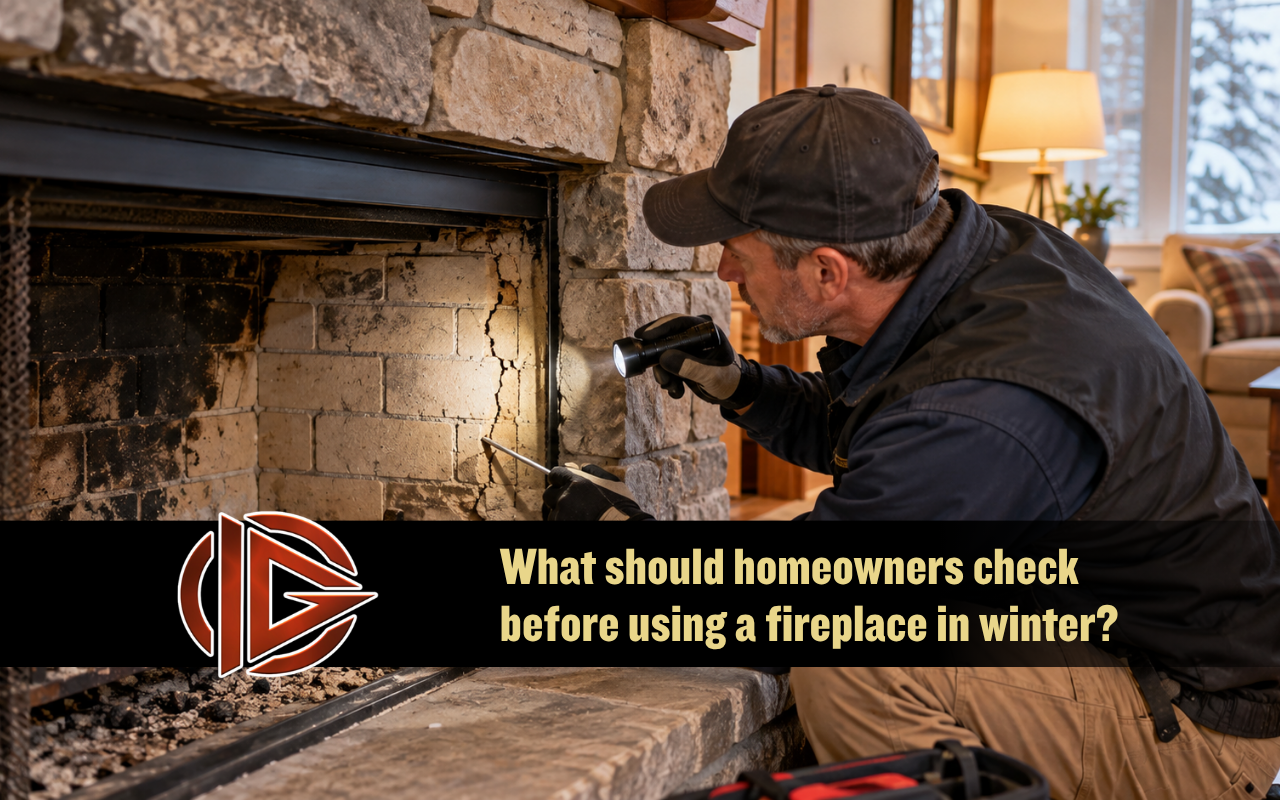
Before the first fire, check for:
Visible problems should be evaluated before regular use begins.
we help homeowners review related construction damage and decide when repair work or specialized evaluation should come first. contact our team when visible damage needs attention.
Fireplace Inspection Before Winter Reveals Early Repair Warning Signs
Visible damage gives homeowners a clear reason to slow down before lighting a fire. Common signs a chimney needs repair include cracked mortar, loose masonry, staining, shifted materials, and damaged exterior details. Visible cracks and loose masonry deserve attention before heat and repeated use continue.
At Ingenious General Construction, we look at related construction conditions around the fireplace and surrounding finishes. A loose tile, damaged wall, or cracked joint may have a different cause. If the issue connects to broader home work, review our construction services before covering the area.
- Cracked mortar can point to masonry deterioration.
- Loose surround materials may indicate finish or substrate damage.
- Damper problems need qualified inspection before routine use.
- Recurring odors can signal ventilation or maintenance concerns.
Moisture Clues Expose Damage Around Chimneys and Roof Intersections
Water staining near a fireplace can point to a problem beyond the visible mark. White deposits, dark streaks, peeling finishes, or damp areas may relate to chimney masonry, flashing, caps, roof intersections, or nearby materials. Water entry should be traced before cosmetic repairs hide the symptom.
Check walls and ceilings near the chimney after rain, then compare new stains with older photos. From the ground, look for missing pieces, open joints, or obvious exterior deterioration. If moisture damage becomes part of a wider repair project, review our whole house remodeling options for related planning.
Water-related damage should be traced before cosmetic repairs cover the symptom. That simple step helps separate surface damage from a recurring source.
Safe Remodeling Protects Clearances Around Fireplace Surrounds and Finishes
Remodeling near a fireplace should start only after the heat-exposed area is understood. New mantels, trim, built-ins, flooring, or wall finishes must respect required clearances and existing conditions. Safe clearances must come first before decorative changes cover or crowd the fireplace.
With Ingenious General Construction, you can discuss surrounding construction repairs without treating every fireplace problem as the same issue. We check visible finish damage, movement, and moisture signs that may affect a remodeling plan. learn about our construction team before planning work around damaged materials.
- Do not conceal cracks with new trim or finishes.
- Keep furniture and storage away from required clear space.
- Document changes before remodeling starts.
- Coordinate finish work after safety conditions are understood.
A Fireplace Safety Checklist Guides Safer Winter Preparation
A practical fireplace safety checklist homeowners can follow should combine visible-condition checks with basic fire and carbon monoxide precautions. The list does not replace specialized inspection. Instead, it helps you decide whether the fireplace is ready for qualified review or should remain unused.
- Check for cracks, loose bricks, and damaged firebox surfaces.
- Look for staining around the chimney and nearby walls.
- Confirm the damper moves as intended.
- Keep the hearth area clear of combustible storage.
- Review smoke and carbon monoxide alarms.
- Arrange qualified service when conditions are uncertain.
The U.S. Fire Administration recommends having chimneys cleaned and inspected each year by a professional. CPSC also advises annual inspection and service of home heating systems, including chimneys and vents. These steps support safer seasonal preparation. You can also explore related home services when surrounding construction needs repair.
Professional Review Clarifies What Happens Before Repair Work
When you contact us, we first ask about the visible problem and where it appears. We then review the related construction damage and explain what may need repair. If the concern requires specialized chimney or fireplace inspection, do not light the fireplace until checked by the appropriate qualified professional.
During the project review with Ingenious General Construction, our team keeps the next steps simple and focused on the visible conditions we can address. The process may include:
- Describe cracks, stains, odors, or loose materials.
- Review the affected fireplace surround or nearby construction.
- Separate cosmetic damage from signs needing further evaluation.
- Explain related repair or remodeling options.
- Plan construction work only after the cause is understood.
A fireplace and chimney repair service should match the actual problem. Identify the source before repair instead of treating every crack, stain, or loose finish as one condition.
Frequently Asked Questions
What are common signs a chimney needs repair?
Cracked mortar, loose masonry, recurring stains, damaged flashing, water entry, and shifted materials can all justify professional evaluation. These signs do not confirm one specific cause. If surrounding construction is also damaged, review our available services before deciding on finish repairs.
How often should a fireplace be inspected for safety?
Inspection frequency depends on the fireplace, fuel type, use, condition, and applicable guidance. The U.S. Fire Administration recommends yearly professional chimney inspection and cleaning. Homeowners should also follow manufacturer instructions and qualified professional recommendations for their specific fireplace system.
Can visible fireplace cracks make winter use unsafe?
Visible cracks near heat-exposed areas should not be ignored. A visual check cannot confirm whether continued use is safe. Keep the fireplace unused until the concern is evaluated. For related wall, finish, or masonry damage, request a construction repair review.
Why does chimney staining need closer inspection before winter?
Repeated staining can indicate moisture movement, but the visible mark may not reveal the source. Chimney masonry, flashing, caps, roof intersections, or nearby materials may need review. If moisture has affected interior finishes, consider related remodeling options after the cause is identified.
Should smoke and carbon monoxide alarms be checked yearly?
Yes, alarms should be maintained according to manufacturer instructions and local requirements. CPSC recommends testing smoke and carbon monoxide alarms regularly and keeping appropriate alarms in the home. Alarm checks are an important safety step, but they do not replace fireplace, chimney, or heating-system maintenance.
Early Action Reduces Fireplace Problems Before Cold Weather
Before cold weather arrives, a fireplace inspection before winter can reveal warning signs before seasonal use becomes routine. At Ingenious General Construction, we can help with related construction damage involving finishes, walls, masonry, or surrounding materials. Repair the cause before covering damage whenever possible. If you are ready to discuss the next step, schedule a project review before winter use begins.
References


