
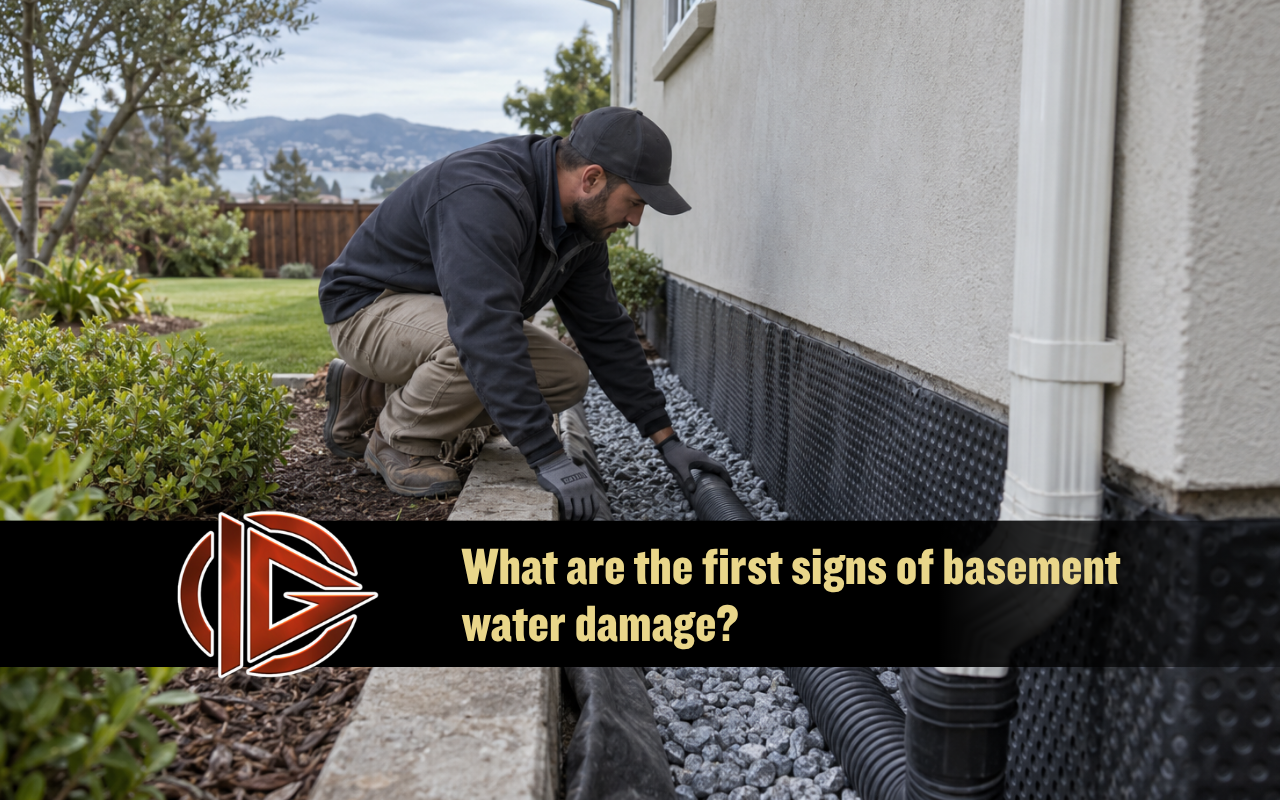
Watch for damp walls, musty odors, water stains, peeling paint, wet floor edges, and white mineral deposits. Repeated symptoms deserve closer inspection..
Start by reviewing Home Drainage Around the House, then contact us if the pattern keeps returning.
Recognize Signs of Basement Water Damage Before Repairs
Common signs of basement water damage include wall staining, peeling finishes, musty odors, damp floor edges, and water after storms. The pattern matters because a mark can remain after an old leak. Active moisture, repeated staining, and storm-related seepage give stronger clues about the current source.
At Ingenious General Construction, we compare indoor symptoms with exterior conditions before recommending the next step. The California Department of Public Health also lists water stains, damp surfaces, peeling paint, and musty smells as moisture warning signs.
- New stains after rain can point to active exterior entry.
- Wet floor edges may indicate seepage near the wall-floor joint.
- Persistent odors can signal hidden damp materials.
- Peeling finishes deserve moisture checks before repainting.
If several signs return in the same area, Request a Basement Project Review before covering the surface.
Improve Basement Waterproofing Bay Area Homes With Drainage
Exterior drainage can reduce the amount of water pressing toward basement walls and lower openings. Gutters, downspouts, grading, landscaping, and soil conditions all affect where runoff moves. For basement waterproofing Bay Area homes, these checks should come before assuming an interior coating will solve the problem.
The U.S. Environmental Protection Agency recommends repairing gutters and keeping ground sloped away from foundations. For homeowners asking how to prevent basement flooding, the practical goal is moving roof and surface water away instead of concentrating it near the house.
Review Understand Exterior Drainage when runoff, downspouts, or grading may be part of the moisture pattern.
Match Waterproofing Methods for Older Homes to Conditions
Waterproofing methods for older homes should match the foundation, access, drainage, cracks, and previous repairs. Older construction can show several moisture paths at once. A method that works for one basement may miss the real source in another, so diagnosis should guide the repair choice.
With Ingenious General Construction, homeowners get a licensed and insured team that can review moisture concerns within a larger renovation context. Our provided project information also notes 20+ years of experience and BBB-certified status.
- Check the foundation condition and visible cracks.
- Compare water timing with recent rain.
- Review grading, gutters, and downspout discharge.
- Note earlier coatings, patches, or drainage work.
These details help separate surface dampness from active water entry before major work is selected.
Delay Interior Remodeling Until Basement Moisture Stays Controlled
Basement finishes should wait until the moisture source is identified and controlled. New flooring, drywall, cabinets, or paint can hide an unresolved problem. Finishing too early may make later inspection harder and can increase the amount of material that needs removal if water returns.
Before planning a finished basement, keep walls and floor edges visible during rainy periods. Move boxes and fabrics away from damp areas, and photograph new stains before they dry. Clear access makes changing moisture patterns easier to compare.
When waterproofing is part of a larger renovation, Explore Whole House Remodeling after moisture conditions are understood.
Prepare for a Focused Basement Waterproofing Inspection Process
A focused inspection starts with when and where water appears, then compares those symptoms with outside drainage and visible foundation conditions. When homeowners contact Ingenious General Construction, we can use rain timing, photos, stains, odors, and previous repairs to make the review more useful.
- Record when moisture appears and how long it remains.
- Photograph stains, cracks, and wet floor edges.
- Check safe exterior areas for runoff and standing water.
- Review likely causes and appropriate next steps.
During the discussion, we explain what the observations suggest without assuming every basement needs the same solution. A basement waterproofing contractor should match the response to the source. Diagnosis comes before finishes or coatings. Use Schedule a Waterproofing Consultation when recurring moisture needs a closer review.
Frequently Asked Questions
What signs suggest basement water damage needs closer inspection?
Repeated stains, musty odors, damp walls, peeling finishes, or wet floor edges deserve closer attention. Storm timing is especially useful. If moisture appears after rain, review Check Home Drainage Conditions and note nearby grading, gutters, and downspout discharge.
Why can basement flooding return after one repair?
Water may reach a basement through more than one path. A repaired crack will not correct poor grading, overflowing gutters, saturated soil, or another opening. Repeated flooding calls for a broader review of the foundation perimeter, rain patterns, and interior entry points.
When should older homes use different waterproofing methods?
Older homes may need different methods when foundation materials, access, earlier repairs, or drainage conditions vary. The right approach depends on what is actually causing the moisture. If waterproofing affects future finishes, Review Remodeling Options after the water source is controlled.
Can interior coatings solve every basement moisture problem?
No. Interior coatings may fit some conditions, but they do not correct every exterior water path. Runoff, poor grading, downspout discharge, cracks, plumbing leaks, and condensation can create similar symptoms. The source should be identified before choosing a coating.
Should remodeling begin before basement moisture is fully controlled?
Remodeling should wait when active moisture remains unresolved. New finishes can hide warning signs and complicate later repairs. If you are planning basement improvements, Discuss Your Basement Project after documenting the moisture pattern and likely source.
Choose Clear Next Steps for a Drier Basement
Effective basement waterproofing Bay Area homes depends on finding the water path before choosing repairs or finishes. With Ingenious General Construction, you can discuss the symptoms, drainage concerns, and renovation goals together. If dampness keeps returning, Request Your Waterproofing Estimate so the next step is based on the actual condition, not guesswork.
References


