
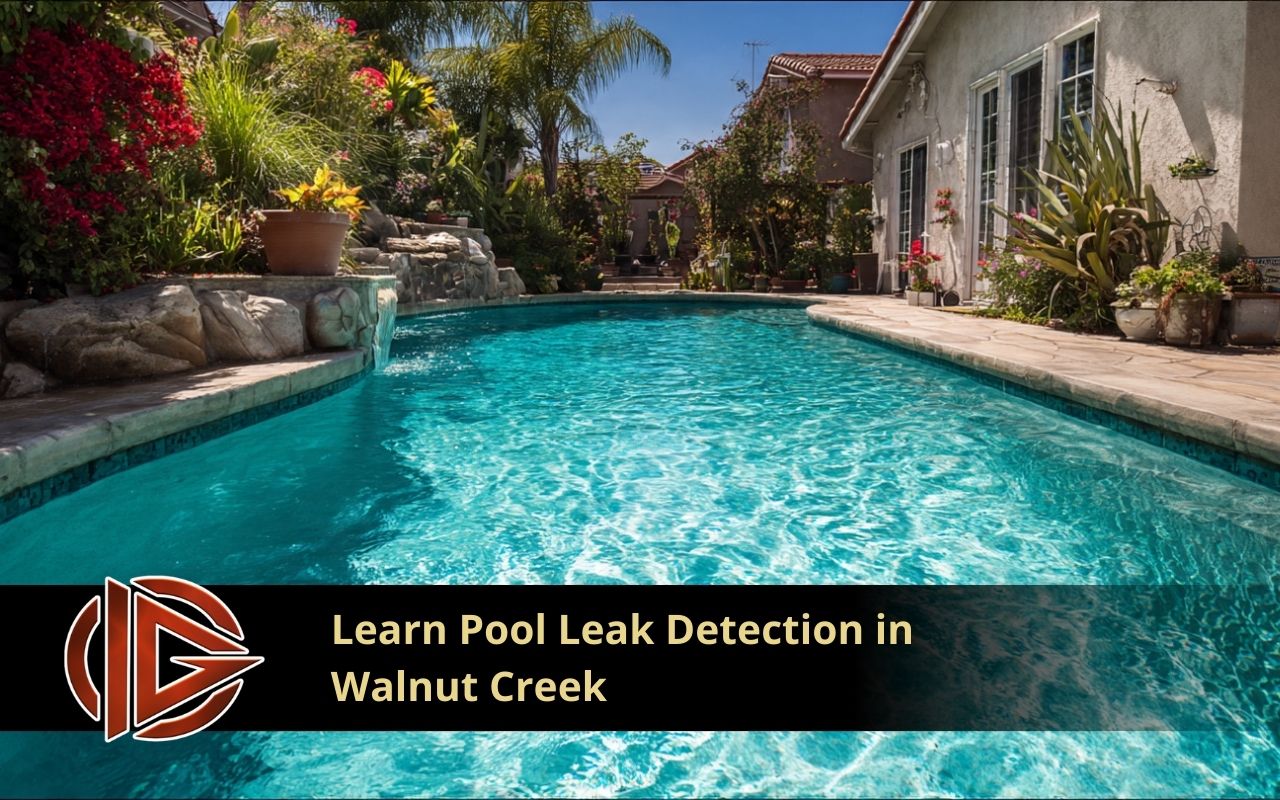
Pool Leak Detection in Walnut Creek starts with calm observation. You want peace of mind, not surprises. Yet, hidden leaks can turn your pool into a daily worry. As water drops, and yard spots stay wet, it helps to know what to watch.
In this guide, you will spot the signs early and act with less stress. Moreover, you will learn simple ways to confirm a leak and choose smart fixes. As a result, you can save water, protect your yard, and keep your pool enjoyable.
Understanding Common Signs of Pool Leaks
First, track the water level for several days. A steady drop can signal more than evaporation. Also, look for damp soil, soft decking, or greener patches near the shell. In addition, listen for gurgling at the skimmer, since air can enter through a loose fitting. Therefore, Pool Leak Detection in Walnut Creek begins with these simple checks.
- Water loss beyond normal evaporation
- Unusual wet areas near the pool
- Air bubbles or gurgling at the skimmer
- Unexplained spikes on your water bill
Doing a Line Check for Leak Detection
How this test helps
For Pool Leak Detection in Walnut Creek, a Pressure test can confirm hidden line loss. First, shut off the system and cap the lines. Then, add air or water to a set level and watch the gauge. If it drops in about ten minutes, a leak is likely. As a result, you can target one line instead of guessing.
Finding and Fixing Surface Damage in Your Pool
Next, scan the surface near steps, corners, and tile edges. Small cracks often start where stress is highest. Therefore, clean the area and remove loose material before patching. For minor marks, an underwater epoxy can bond well. However, if the gap is wide or growing, a specialist can prevent deeper damage.
Exploring Techniques for Locating Underground Leaks
Sometimes the leak hides under the deck or yard. In that case, listening tools can help you narrow the area. Also, a soil moisture meter can reveal zones that stay wet longer than nearby ground. Meanwhile, isolating plumbing sections can reduce the search area. For more tools, see this pool maintenance technology guide.
Using Dye Testing to Confirm Leak Locations
Then, turn off the pump and let the water settle. Gently add pool-safe dye near a suspected joint or fitting. If the color pulls inward, you likely found the leak point. Moreover, dye testing is fast and low effort. Consequently, you can confirm the spot before you open up decking or plumbing.
Repair Options for Pool Leaks
Once you confirm the source, match the repair to the problem. Next, Pool Leak Detection in Walnut Creek often leads to quick, targeted repairs. Small plumbing issues may need a coupling or sleeve. Surface spots may need epoxy or sealant. If the fix is larger, a qualified builder can protect the structure.
- Couplings or sleeves for small pipe issues
- Underwater epoxy for minor surface repairs
- Tile reset and sealing for loose edges
- Professional repair for major structural concerns
If you are planning a bigger restoration, talk with a pool contractor in California to align scope and timing.
Preventative Maintenance to Avoid Future Leaks
Prevention is easier than repair, so build small habits. First, keep water chemistry balanced to reduce surface wear. Also, inspect fittings, lights, and tile lines during routine cleaning. In colder months, winterize lines to reduce freeze stress. For chemistry basics, review how to maintain pool water quality.
- Test water weekly and correct imbalances
- Replace worn gaskets and seals early
- Keep baskets clean to reduce pump strain
- Cover the pool to limit debris buildup
Importance of Timely Leak Detection and Repair
Acting early saves water and limits damage. Even a small leak can erode soil and weaken support under the shell. As a result, decking can shift and repairs can grow. Therefore, quick action protects your pool, your yard, and your budget. In addition, early fixes help you avoid repeated downtime.
Professional Help: When to Call a Pool Leak Detection Specialist
Call a specialist when you cannot confirm the source or the issue returns. Professionals use advanced tools to find hidden problems with less disruption. Moreover, they can check plumbing, equipment, and the shell in one visit. If you want help with a clear plan, contact our team for a focused inspection and next steps.
Frequently Asked Questions
How do I tell evaporation from a leak?
Measure water loss over a few calm days. If the drop stays steady and large, a leak is more likely.
Where do leaks usually start?
Common areas include fittings, lights, valves, and weak joints. Surface wear near edges can also be a clue.
Do I need to drain the pool to test for leaks?
Usually, no. Dye checks and line checks often work with the pool filled and the pump off.
Can a small leak really cause damage?
Yes. Over time, water can soften soil and shift decking support. Therefore, early action matters.
How often should I inspect my pool?
Do quick visual checks weekly. Also, do a deeper inspection each season, especially before heavy use.
Ensuring a Leak-Free Pool for Lasting Enjoyment
Finally, Pool Leak Detection in Walnut Creek keeps your pool ready for stress-free days. Watch for early clues, confirm the source with simple tests, and choose repairs that fit the issue. Moreover, steady upkeep helps prevent repeat problems. With these steps, you can protect your investment and enjoy every swim with confidence.


