
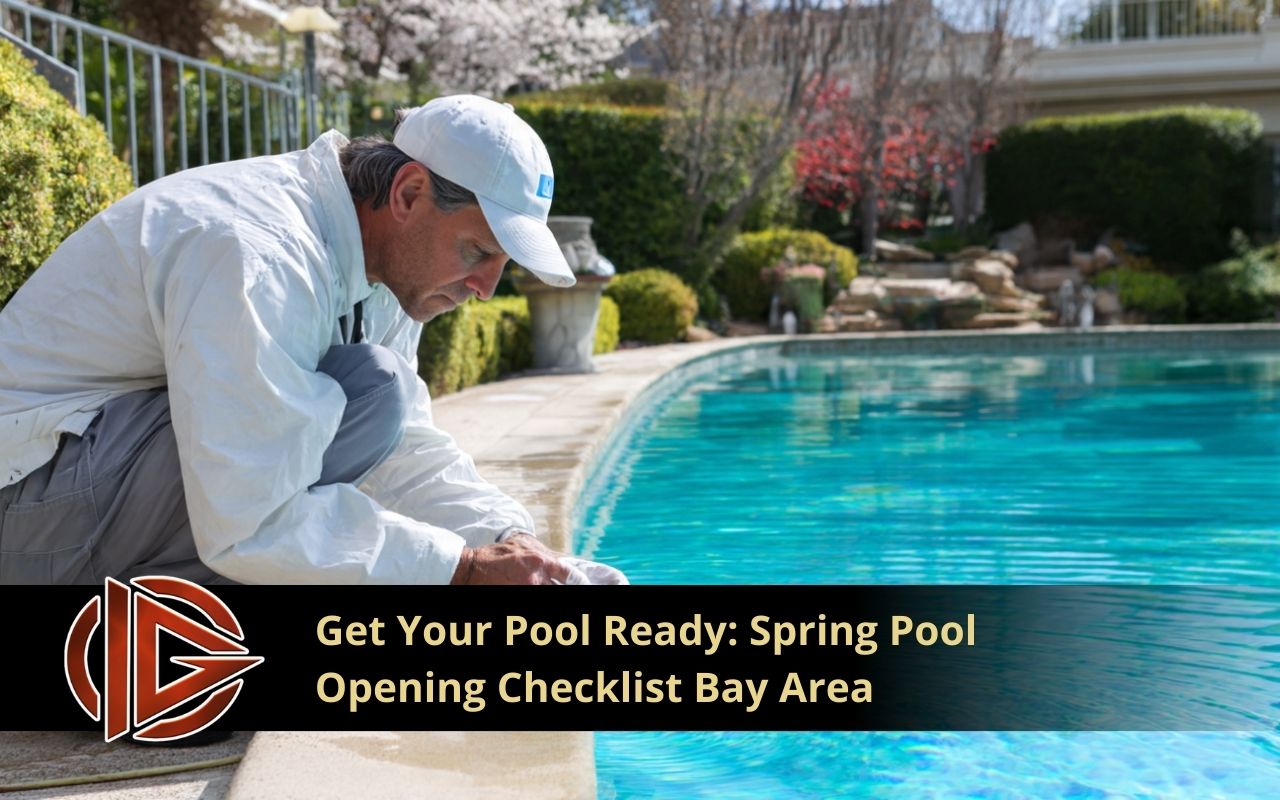
Spring pool startup checklist Bay Area helps you open your pool with less stress. As spring arrives, focus on comfort, safety, and clean water. The Bay Area climate changes fast, so details matter. Ingenious General Construction often sees small issues turn into big repairs when steps are missed.
Therefore, follow a clear plan for water chemistry balance, equipment inspection, safety review, and an opening timeline. In addition, steady circulation and clean filtration support a smoother season. With this guide, you can protect your pool, extend its life, and enjoy worry-free swims.
Check Water Chemistry Levels
Start Spring pool startup checklist Bay Area by testing key water values. First, measure pH, chlorine, alkalinity, and calcium hardness. Then, compare results to ideal ranges. After that, adjust in the right order, because alkalinity helps steady pH. Finally, run the pump to mix everything well.
- pH: 7.2 to 7.6 for comfort and effective chemicals
- Free chlorine: 1 to 3 ppm to control bacteria
- Total alkalinity: 80 to 120 ppm to buffer pH
- Calcium hardness: keep in range to reduce scaling or corrosion
Next, log each test and treatment. This record makes future checks faster and clearer. For ongoing care, review how to maintain pool water quality and keep your water steady all season.
Inspect and Clean Pool Gear
Continue Spring pool startup checklist Bay Area by removing covers, hoses, and accessories. Then rinse off dirt, leaves, and cobwebs. After that, lay items out so you can spot cracks or wear. This simple step supports a better equipment inspection and fewer mid-season surprises.
- Check hoses, O-rings, and seals for splits or flattening
- Look for frayed cords and worn light fixtures
- Tighten ladder bolts, rails, and handholds
- Inspect pump and filter lids for firm, leak-free closure
Also, replace damaged parts early, because delays often lead to leaks. If you want smarter upkeep, explore pool maintenance technology tips. Ingenious General Construction can also help identify hidden wear before it causes downtime.
Fix and Review the Pool Surface
Next, walk the pool edge and check the shell or liner for chips, cracks, or tears. Small flaws can grow once water pressure rises. Also, note stains or discoloration, because they may point to algae or leaks. Quick repairs now often prevent bigger damage later.
For minor issues, use the right patch kit and follow directions carefully. Then let the repair cure fully before refilling. However, deep cracks or large liner damage need professional help. Ingenious General Construction can guide the right repair approach for your pool material.
Check Your Pool Filter System
Now, focus on filtration during Spring pool startup checklist Bay Area. First, shut off the pump and relieve pressure per the manual. Then open the filter and inspect parts for debris, rust, or damage. Replace worn gaskets to reduce leaks when the system restarts.
Clean the filter media based on your type. Backwash sand, rinse cartridges, and recharge DE after cleaning. Afterward, restart the pump and watch the pressure gauge. A stable reading suggests healthy flow. If you need a licensed local partner, see pool contractor options in California.
Do a Pool Safety Review
Then complete a safety review around the deck and entry points. Check fences, gates, and locks for proper function. Also confirm the cover fits well and has no tears. In addition, remove slippery buildup on the deck to reduce fall risks during busy swim days.
- Verify gates self-close and latches sit out of a child’s reach
- Place lifebuoys, reaching poles, and first-aid kits within reach
- Test pool alarms by triggering sensors
- Replace faded signs and broken hooks
Moreover, review emergency steps with family and guests. This simple routine builds confidence. Ingenious General Construction recommends treating safety checks as part of your regular weekly habit.
Set Water Level and Recheck Chemicals
After repairs and filter care, refill to the right level, usually halfway up the skimmer opening. Water that is too low can strain seals, while water that is too high reduces skimmer pull. Next, retest chemistry, because fresh water can shift balance quickly.
Then adjust pH and chlorine again using the same order as before. Also consider preventive algaecide if the opening timeline is late. As a result, your water stays clearer during the first critical weeks.
Start Circulation and Follow Your Opening Timeline
Next, remove winter plugs and set valves correctly. Then prime the pump to avoid air locks. During Spring pool startup checklist Bay Area, run circulation for at least 24 hours. Meanwhile, listen for odd sounds and watch for small leaks around fittings and lids.
Also check return jets for even flow. Steady circulation spreads chemicals and helps the filter capture debris. Therefore, your opening timeline stays on track and your water stabilizes faster.
Prepare the Deck for Summer Use
Once the pool runs well, tidy the area for comfort and safety. Sweep leaves, remove moss, and set furniture in shaded spots. Add lighting for evening swims, and store chemicals away from direct sun. As a result, the space feels cleaner, safer, and more inviting.
Do Final Checks and Tests
Finally, inspect skimmer baskets, jet returns, and equipment noise levels. Then retest water values to confirm they stayed stable overnight. Also check temperature for swimmer comfort. If possible, ask someone else to scan the setup, because a fresh view catches missed details.
Replace or clean baskets after this test run. With these final checks, your setup becomes more reliable, and you can start the season with fewer interruptions.
Frequently Asked Questions
When should I start my spring pool opening in the Bay Area?
Start when nights warm up and debris drops less often. Many owners begin in early to mid-spring to avoid heavy algae growth.
How long should I run the pump after adding startup chemicals?
Run it at least four hours after each major adjustment. For the first day, aim for extended circulation to mix and stabilize.
What if my filter pressure rises quickly after opening?
That often means trapped debris is loading the filter fast. Clean or backwash again, and keep baskets clear until pressure steadies.
Do I need a professional for small cracks or liner tears?
Small issues can be patched if you follow product steps. However, deep cracks or large tears should be evaluated by a pro.
What safety items should be closest to the pool?
Keep a reaching pole, a lifebuoy, and a stocked first-aid kit nearby. Also ensure gates latch and alarms function correctly.
Ready for a Calm Summer Pool Season
Spring pool startup checklist Bay Area brings each step together, from water chemistry balance to a full safety review. With clean filtration, steady circulation, and timely fixes, your pool is set for summer. If you want hands-on support, contact Ingenious General Construction at schedule a pool startup visit and keep your season running smoothly.


