
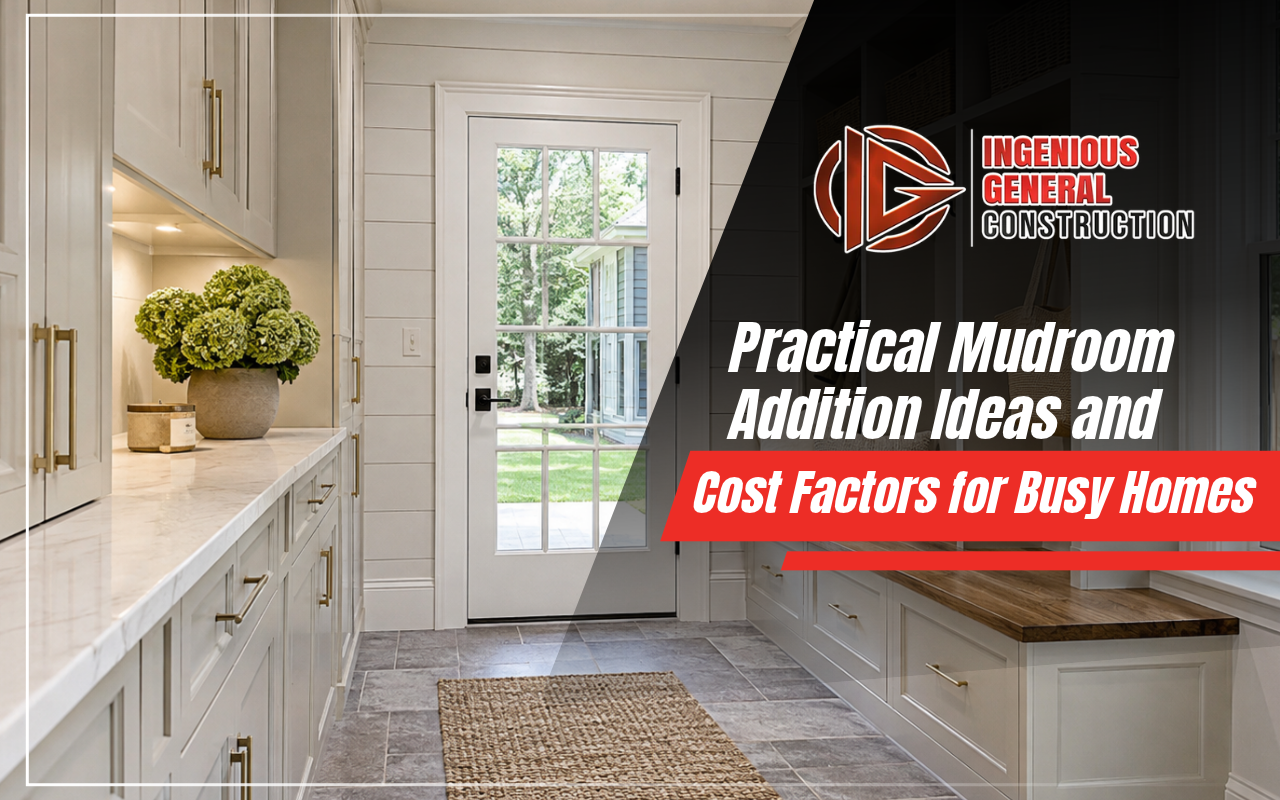
Backpacks on the kitchen floor, shoes piled by the door and muddy paws on clean tile are signs a home needs a drop zone. Many Bay Area houses were built without one, so families end up using the garage step or entry hall. You can request a mudroom estimate to see what your layout can fit.
This guide to mudroom addition ideas and cost covers layouts, storage, materials and the decisions that shape the final budget, with short answers to the most common questions.
What Is a Mudroom and Why Add One?
A mudroom is a transition space between the outdoors and the main living areas. It holds shoes, coats, bags and gear, and it keeps dirt from spreading through the house.
- Keeps entries and kitchens clutter-free
- Protects floors from mud, water and grit
- Gives each family member a defined storage spot
- Creates a place for pets to be cleaned before coming inside
- Can double as a laundry or utility area
How Do You Add a Mudroom to an Existing Home?
There are three common paths: convert part of a garage, enclose a covered porch or side entry, or build a small new addition. The right choice depends on where the family actually enters the house.
- Track which door everyone uses most each day.
- Check for space between that door and the main living area.
- Decide between conversion and a new addition.
- Plan electrical, lighting and any plumbing early.
- Confirm permit needs with the city before design is final.
Garage-side mudrooms are popular because most families enter from the garage, and the space often already has a slab and roof. That can shorten the schedule and simplify permits.
What Affects the Cost of a Mudroom Addition?
Size, whether you build new or convert existing space, foundation and roofing work, plumbing for a sink or laundry, and built-in cabinetry all shape the final number. Each project is priced individually. To compare conversion and addition options for your home, you can compare your mudroom options with our team.
| Factor | Lower impact | Higher impact |
|---|---|---|
| Space | Converting existing area | New addition with foundation |
| Storage | Hooks and open shelves | Custom lockers and cabinets |
| Plumbing | None | Sink, pet wash or laundry |
| Flooring | Durable vinyl | Porcelain tile with heating |
For broader planning numbers, our overview of California home addition services explains how additions are scoped.
Which Mudroom Ideas Work Best for Families?
Individual cubbies or lockers for each person work best, because everyone knows where their things go. Add hooks at two heights so kids can reach their own.
Other useful ideas include a charging shelf for phones, a drawer for keys and mail, a boot tray near the door and a small closet for brooms and seasonal gear. A wall calendar or message board helps busy families stay organized on the way out.
What Are the Best Mudroom Bench Ideas?
A built-in bench around 18 inches high and 15 to 18 inches deep gives a comfortable place to sit and change shoes. Storage below and hooks or cubbies above make the most of one wall.
- Lift-top benches for hidden storage
- Open cubbies below for shoes and boots
- Pull-out baskets for hats, gloves and pet leashes
Built-in benches are a finish carpentry project, and our custom carpentry and millwork team builds them to fit the space exactly.
Which Materials Hold Up Best in a Mudroom?
Porcelain tile, luxury vinyl plank and sealed concrete resist water and grit. Semi-gloss or scrubbable paint, beadboard or shiplap walls and solid-surface tops on benches also clean easily.
Good ventilation helps wet coats and shoes dry faster, which reduces odors and moisture problems. A small exhaust fan or operable window is often enough for a compact space.
How Should a Mudroom Fit the Rest of the Layout?
Place the mudroom between the entry and the kitchen or laundry so traffic flows naturally. Avoid layouts that force people to walk through living rooms with wet shoes. A door between the mudroom and the house also helps contain noise and dirt. Our guide to home addition layout tips covers flow and placement.
Working With a Home Addition Contractor in Walnut Creek CA
With 20+ years of experience, our team at Ingenious General Construction designs and builds mudrooms, additions and garage conversions across Walnut Creek and the Bay Area. At Ingenious General Construction, we are licensed and insured.
Every project starts with a walk-through of how your family enters and moves through the home. From there, we recommend whether a conversion, porch enclosure or new addition makes the most sense for your lot and budget.
Frequently Asked Questions
How big should a mudroom be?
Even a 5 by 6 foot area can work for a small family. Larger households benefit from more wall length for lockers.
Does a mudroom need a permit?
New additions and enclosed porches usually do. Simple built-ins inside existing space often do not, but electrical or plumbing changes may still need one.
Can a mudroom include laundry?
Yes. Combining mudroom and laundry is common and makes good use of plumbing, ventilation and floor space.
Does a mudroom add home value?
It can improve daily function and buyer appeal, especially for families with children, pets or active outdoor hobbies.
Do you offer free estimates?
Yes. We provide free estimates for mudrooms and home additions.
Bringing Order to Your Entry With the Right Mudroom
Smart mudroom addition ideas and cost planning start with how your family really uses the entry. The right layout keeps clutter, dirt and stress out of the rest of the home.
Call (925) 848-7043 or plan your mudroom addition today. With Ingenious General Construction, every estimate is free.


