
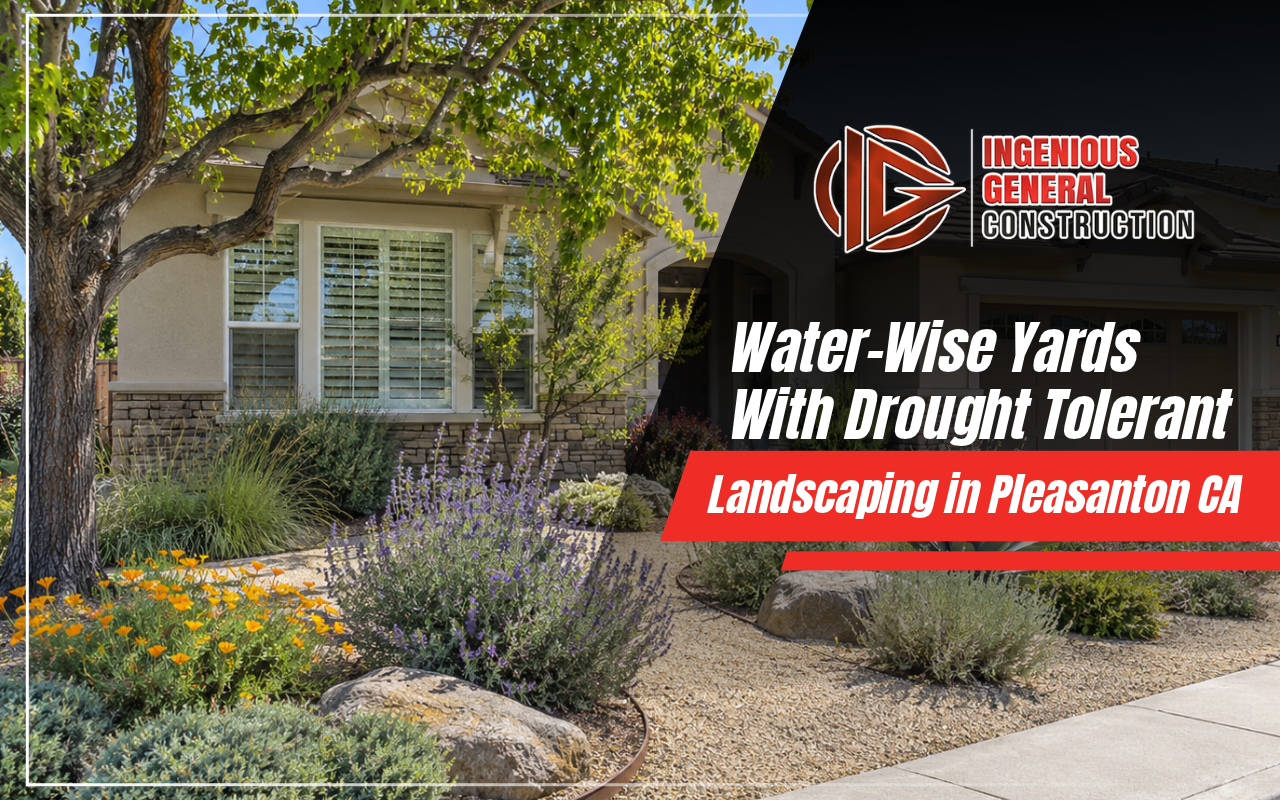
Summer water bills climb, the lawn turns brown by July and heavy clay soil cracks or turns to mud depending on the season. Many Tri-Valley homeowners are ready for a yard that looks good without constant watering. You can request a landscaping estimate to plan the change.
Drought tolerant landscaping in Pleasanton CA works best when plant choices, soil preparation and irrigation are planned together. The answers below cover what grows well in local clay, how to replace grass and where rebates may help.
What Is Drought Tolerant Landscaping and How Does It Work?
Drought tolerant landscaping uses plants that need little extra water once established, paired with efficient irrigation, mulch and permeable hardscape. The goal is a yard that stays attractive through long, dry summers.
- Native and Mediterranean plants grouped by water needs
- Drip irrigation instead of spray heads
- Thick mulch to hold moisture and block weeds
- Gravel, pavers or decomposed granite in place of some turf
It is not the same as a bare gravel yard. A good design still has layers of foliage, flowers and shade, just with plants suited to the local climate.
Which Drought Tolerant Plants Grow Best in Clay Soil?
Many California natives tolerate the heavy clay common in Pleasanton, especially once established. Good drainage at planting time and avoiding overwatering are the keys to success.
| Plant | Type | Why it works |
|---|---|---|
| Deer grass | Ornamental grass | Handles clay and summer heat |
| Yarrow | Perennial | Tough, low water and pollinator friendly |
| California fuchsia | Perennial | Late summer color with little water |
| Toyon | Shrub | Native, adaptable and good for screening |
| Coffeeberry | Shrub | Evergreen and tolerant of many soils |
Planting in fall lets winter rain help roots settle before the first dry summer. Avoid planting in low spots where clay holds standing water, since even tough natives can rot in soggy soil.
How Do You Replace Grass With Drought Tolerant Landscaping?
Remove or smother the lawn, improve the soil, install drip irrigation, plant in groups and finish with mulch. Many homeowners use sheet mulching, covering turf with cardboard and mulch, to avoid hauling soil away. To plan the conversion step by step, you can plan your lawn conversion with our team.
- Turn off or adjust existing sprinklers.
- Remove turf or sheet mulch over it.
- Loosen and amend planting areas for drainage.
- Install drip lines and a smart controller.
- Plant, then cover soil with 2 to 3 inches of mulch.
Keep mulch a few inches away from plant stems and tree trunks to prevent rot. Watch the first summer closely and adjust drip timing as plants grow.
Are There Lawn Replacement Rebates in Pleasanton?
Lawn conversion rebates have been offered through local water programs, but amounts, rules and availability change. Many programs require approval before any grass is removed.
Check with the City of Pleasanton and Zone 7 Water Agency for current programs before starting. Keeping before and after photos also helps with any application. Some programs also require specific plant coverage or irrigation upgrades, so read the requirements before design is final.
Which Irrigation Works Best for Water-Wise Yards?
Drip irrigation and smart controllers deliver water directly to roots and adjust to weather. They waste far less than overhead spray, especially on slopes and clay that absorb water slowly. Running drip zones in shorter, repeated cycles helps clay soak water instead of shedding it. Our guide to the efficient yard irrigation systems compares the options.
How Can Hardscape Reduce Water Use?
Patios, paths and gravel areas replace thirsty turf while adding usable outdoor space. Permeable pavers and decomposed granite let rain soak in instead of running off. A seating area or fire pit can turn former lawn into the most-used part of the yard.
Our ideas for sustainable hardscaping material ideas show how to balance plants and surfaces.
What Design Ideas Keep a Dry Garden Looking Full?
Layer plants by height, repeat a few species for unity and add boulders, dry creek beds or containers as focal points. Silver, purple and green foliage keeps color going when flowers fade. Leaving clear paths between plant groups also makes maintenance easier.
For more inspiration, our collection of backyard landscaping design ideas covers styles that suit the Tri-Valley climate.
Choosing a Landscaping Company in Pleasanton CA
Look for a team that understands local clay, irrigation design and permits for hardscape or grading. With 20+ years of experience, our team at Ingenious General Construction designs and installs water-wise landscapes across the East Bay. At Ingenious General Construction, we are licensed and insured. Learn more about our Pleasanton landscaping design services.
Frequently Asked Questions
Do drought tolerant plants need water at first?
Yes. Most need regular water during the first one or two summers while roots establish, then much less once they mature.
Is artificial turf a good alternative?
It saves water but gets hot in direct sun and offers no habitat. Many homeowners prefer living plants combined with patios or paths.
When is the best time to plant in Pleasanton?
Fall is ideal, because cooler weather and winter rain help new plants settle.
Will a drought tolerant yard look brown in summer?
Not when designed well. Evergreen shrubs and summer-blooming natives keep color through dry months.
Do you offer free estimates?
Yes. We provide free estimates for landscaping and hardscaping projects.
Building a Beautiful Yard That Uses Less Water
Well-planned drought tolerant landscaping in Pleasanton CA saves water, reduces maintenance and still gives you a yard you enjoy every season. The right plan turns a struggling lawn into an outdoor space that works with the local climate.
Call (925) 848-7043 or start your water-wise landscape today. With Ingenious General Construction, every estimate is free.


